
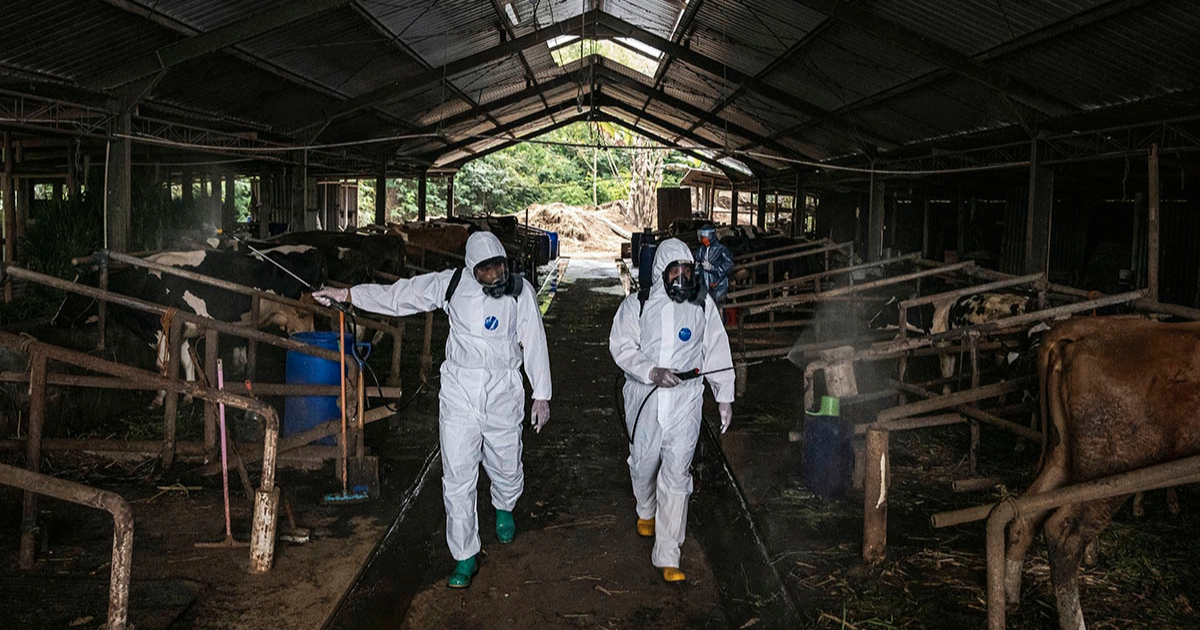
Zoonotic diseases, those transmitted between animals and humans, represent one of the most significant and persistent threats to public health and economic development in Sub-Saharan Africa. More than 60% of emerging infectious diseases affecting humans globally are zoonotic in origin, and Sub-Saharan Africa remains a geographical hotspot for outbreaks of diseases such as rabies, Rift Valley fever, Ebola, brucellosis, bovine tuberculosis and anthrax. While the human suffering associated with these diseases often receives the most attention, their economic impacts are equally profound. Zoonotic diseases impose heavy financial burdens on health systems, disrupt agricultural productivity, reduce household income, destabilize livestock markets, restrict regional and international trade, and create long-term macroeconomic loss through reduced human capital and decreased national productivity.
Impact on Livestock Productivity and Agricultural Systems
Livestock is central to livelihoods in Sub-Saharan Africa. Across pastoral, agro-pastoral, and mixed crop-livestock systems, animals represent food security, insurance assets, and a source of income. Zoonotic diseases compromise all these functions. Diseases such as brucellosis, foot-and-mouth disease, Rift Valley fever and bovine tuberculosis reduce milk production, slow growth rates, increase mortality, and impair fertility. These conditions drastically reduce the economic value of livestock, particularly in communities where herds are the primary measure of wealth.
In many parts of the region, livestock contributes between 30% and 80% of household income. The loss of a single productive cow due to a preventable disease is equivalent to the annual income of a smallholder farmer. Outbreaks of Rift Valley fever in Kenya, Tanzania, and South Africa have triggered mass livestock deaths, temporary bans on livestock slaughter and movement, job losses for herders and traders, and major price fluctuations in meat and milk markets. The combined effects lead to lost revenue, reduced asset value, and the diminishing resilience of households to future shocks.
Public Health Expenditures and Burden on Health Systems
The economic impact of zoonotic disease extends deeply into public health spending. Treating zoonotic infections places a significant burden on already strained health systems in the region. Rabies alone costs Africa more than US$500 million each year in treatment, lost income, and livestock mortality, despite being entirely preventable. Human brucellosis requires prolonged medical care and causes chronic illness that reduces working ability. Ebola outbreaks are even more devastating: the 2014–2016 outbreak in West Africa caused economic losses estimated at over US$50 billion, much of it related to the collapse of health services, travel restrictions, reduced labor supply, and the diversion of government budgets toward crisis response.
Sub-Saharan African countries already allocate limited resources to healthcare. Zoonotic disease outbreaks often force governments to divert funds from essential health services such as maternal care, vaccination programs, and non-communicable disease management. These short-term reallocations create long-term public health costs that perpetuate cycles of vulnerability.
Impacts on Trade and Market Access
Zoonotic disease outbreaks also affect national and regional trade. Many of Sub-Saharan Africa’s economies depend on livestock exports, particularly to Middle Eastern and Asian markets. Animal health concerns can trigger trade bans, quarantine restrictions, and reduced demand. The bans on live animal exports from East Africa during outbreaks of Rift Valley fever reduced trade revenues by millions of dollars and destabilized local economies.
Even in the absence of a major outbreak, endemic zoonoses reduce the ability of African countries to meet international sanitary and phytosanitary (SPS) requirements. Weak surveillance, limited veterinary infrastructure, and poor diagnostic capacity undermine confidence in the safety of animals and animal products. As a result, African livestock producers often suffer from reduced access to higher-value export markets, limiting national income growth and competitiveness.
Labor Productivity and Human Capital Loss
Beyond health system expenditures, zoonotic diseases reduce labor productivity by causing illness and premature death among working-age populations. Many zoonotic diseases are occupational hazards for farmers, meat processors, veterinarians, traders, abattoir workers, and wildlife handlers. Brucellosis, anthrax, rabies, and leptospirosis lead to chronic disability, prolonged absenteeism, and reduced physical capacity. When primary breadwinners fall sick, household income declines sharply.
This dynamic contributes to the cycle of poverty: families sell livestock, withdraw children from school, or take on high-interest borrowing to pay for treatment. In pastoral and rural communities, labor shortages translate into reduced agricultural production, lower household consumption, and reduced investment in long-term economic opportunities. Human capital loss is among the most significant but least measured economic costs of zoonotic diseases.
Macroeconomic and Developmental Consequences
At the macroeconomic level, zoonotic diseases influence national development trajectories. Outbreaks disrupt tourism, foreign investment, and public confidence in government institutions. During Ebola outbreaks, hotel occupancy, regional flights, commercial trade, and cross-border business activity dropped abruptly. Fear and uncertainty cause economic contraction regardless of direct disease transmission.
Furthermore, zoonotic diseases delay structural transformation of agricultural and livestock value chains. Smallholder farmers, who dominate the livestock sector, often have limited access to vaccines, diagnostics, extension services, and disease control programs. This constrains productivity, limits commercialization, and reinforces subsistence-level farming, thereby slowing economic transition from rural to industrial development.
Community-Level and Household Economic Impacts
At the household level, zoonotic disease generates multiple simultaneous burdens: the cost of treatment, loss of labor, livestock mortality, reduced productivity, and reduced access to markets. Families are forced to redirect income from education and food to medical care or livestock replacement. The poor are disproportionately affected because they have fewer coping strategies, more exposure to animals, and limited access to veterinary and medical services.
Women, who play a central role in small livestock production and food preparation, face heightened risk of exposure to zoonotic pathogens. The gendered nature of the livestock economy means that zoonotic disease impacts often magnify gender inequality, with long-term implications for community welfare and economic growth.
The Importance of One Health Approaches
Given the interconnected nature of human, animal, and environmental health in the region, addressing the economic burden of zoonotic disease requires a One Health approach. Investments in veterinary public health, wildlife health management, efficient surveillance systems, and cross-sectoral collaboration are far less costly than the economic losses associated with major outbreaks. Studies consistently show that preventative interventions—such as mass dog vaccinations to control rabies, improved laboratory capacity, and timely vaccination of livestock—yield high economic returns.
Public-private partnerships, community outreach, and regional coordination are also essential. Disease outbreaks do not respect national boundaries; therefore, coordinated control measures reduce regional trade disruptions and generate shared economic benefits.
Conclusion
Zoonotic diseases remain a major but preventable economic burden in Sub-Saharan Africa. Their impacts extend far beyond human health to agriculture, livestock productivity, trade, labor markets, household income, national budgets, and long-term development. Strengthening veterinary services, improving public health systems, investing in disease surveillance, and adopting One Health strategies are among the most cost-effective ways to protect both public health and economic stability. The region’s future growth and poverty reduction efforts depend significantly on its ability to anticipate, manage, and prevent zoonotic disease threats.